

Official Swim Rules of the CLDSA
For a swim to be officially recognised by the CLDSA, there are a few rules. These rules are particularly important for the safety of the swimmers. They are not unreasonable rules, and none of them exist to catch anyone out. The rules are in place so that swims are fair, comparable, and again, most importantly safe.
The Start and Finish
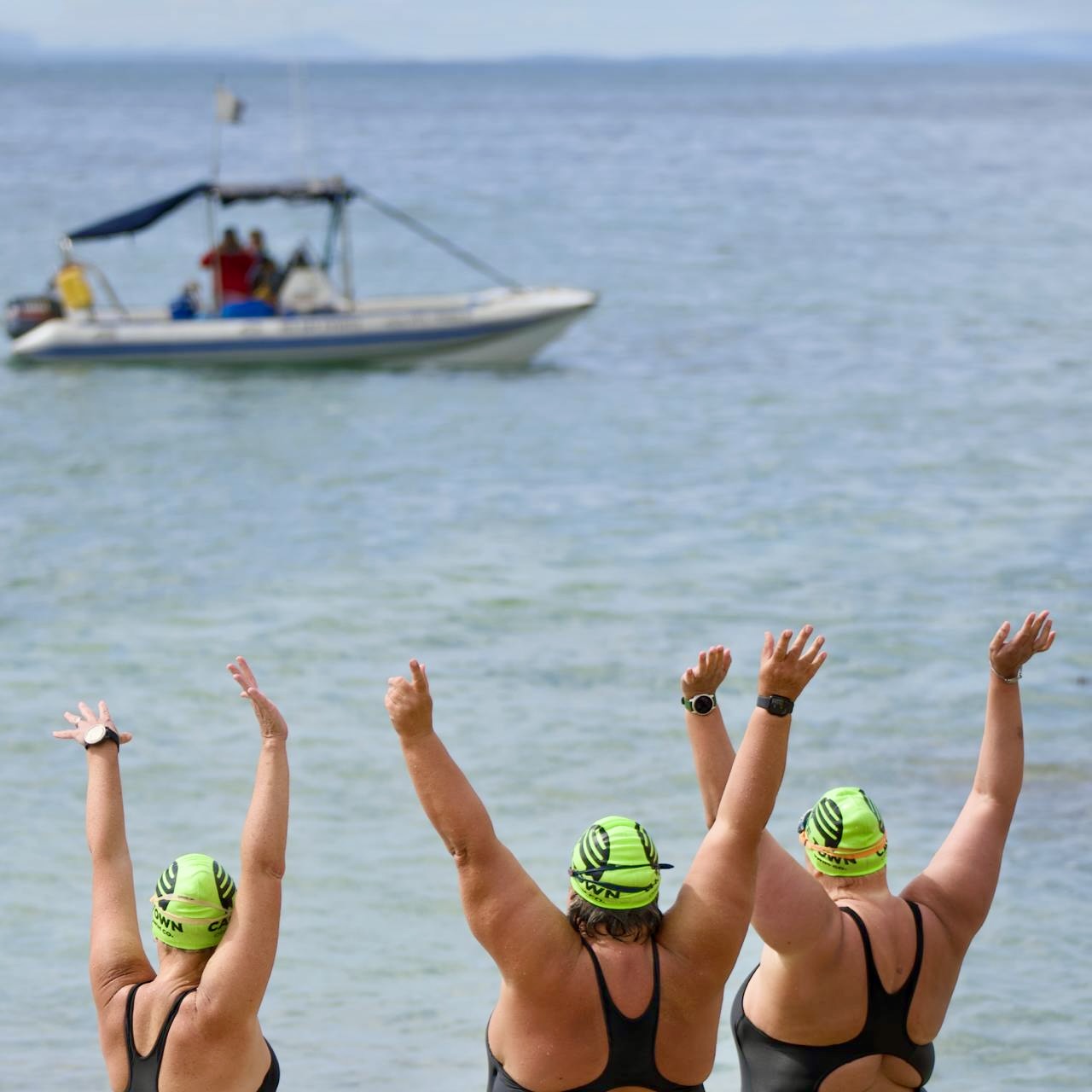
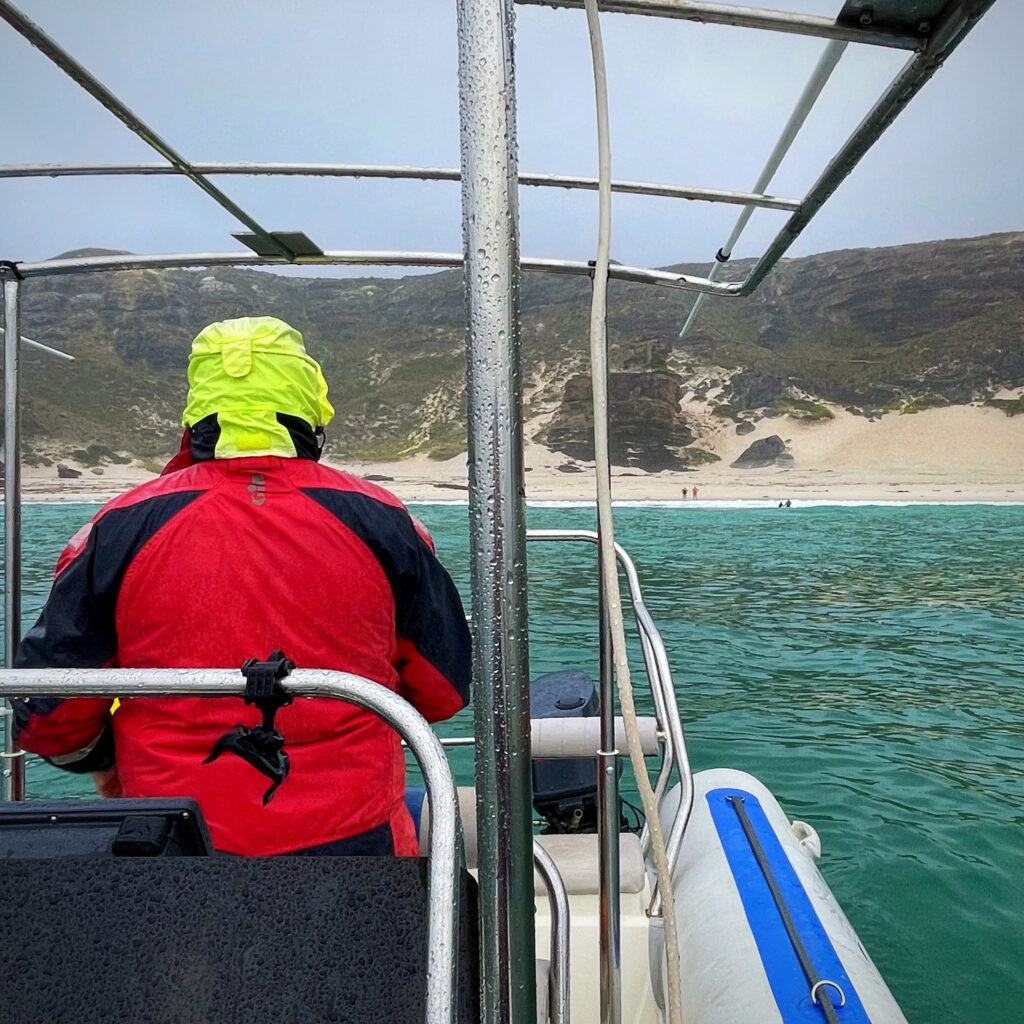
A recognised swim starts when the swimmer enters the water from the shore they are leaving from. If there is a beach, the swimmer walks in. If there isn’t a beach, but there are rocks, a slipway, a dock, or a cliff, then the swimmer touches land and releases into the water.
The swim is finished when any part of the swimmer’s body reaches land on the other side, with no water beyond them. If the swim finishes on a beach, then the swimmer must clear the water.

Once the Swim Starts, You May Not Stop
When the swim begins, the swimmer stays in the water until they either finish or the swim is called off. This means there can be no hanging onto the boat, no leaning on paddlers, no grabbing a kayak “just for a second.” Accidental contact happens — boats bob, waves shove things around — and that’s fine as long as it is not initiated by the swimmer. Whether contact is intentional or not, is judged by the observer.
The Official Time
The swimmer’s time is equally straightforward, it starts the moment the swimmer enters the water and stops the moment the swimmer touches land on the far side.
Boats, buddies and staying close
A swimmer can have up to three swimmers per boat, but for first-time swims the CLDSA really recommends keeping it to two. It’s calmer, easier to manage, and generally less chaotic when conditions change. If swimmers are sharing a boat, they are expected to stay reasonably close to one another — within about 25 metres. If swimmers drift too far apart, the observer has the right to call one or both swimmers in and abort the swim. That might sound strict, but it is a safety precaution.
Feeding is fine — Leaning is not
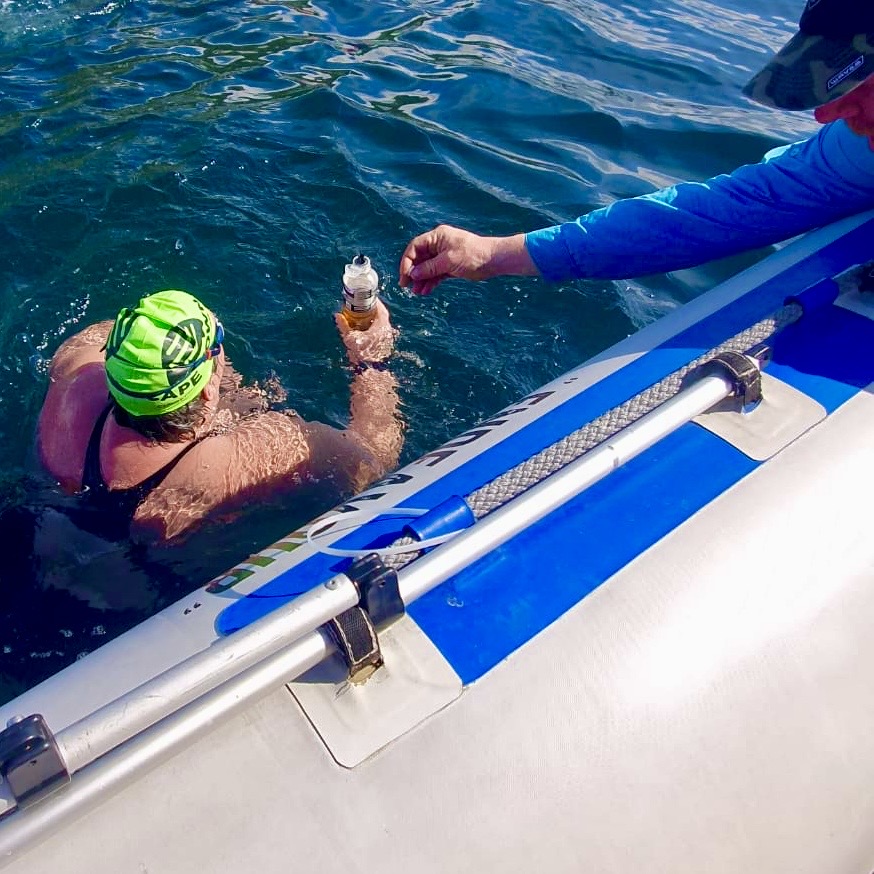
A swimmer can absolutely receive feeds, drinks, sunscreen, goggles, whatever they need — but they can’t be supported by the exchange. No holding onto the boat, crew, kayaks or any other object, floating or fixed. Think about it: food gets handed to a swimmer, not the swimmer getting “held up/supported” by it.
Navigation and Currents
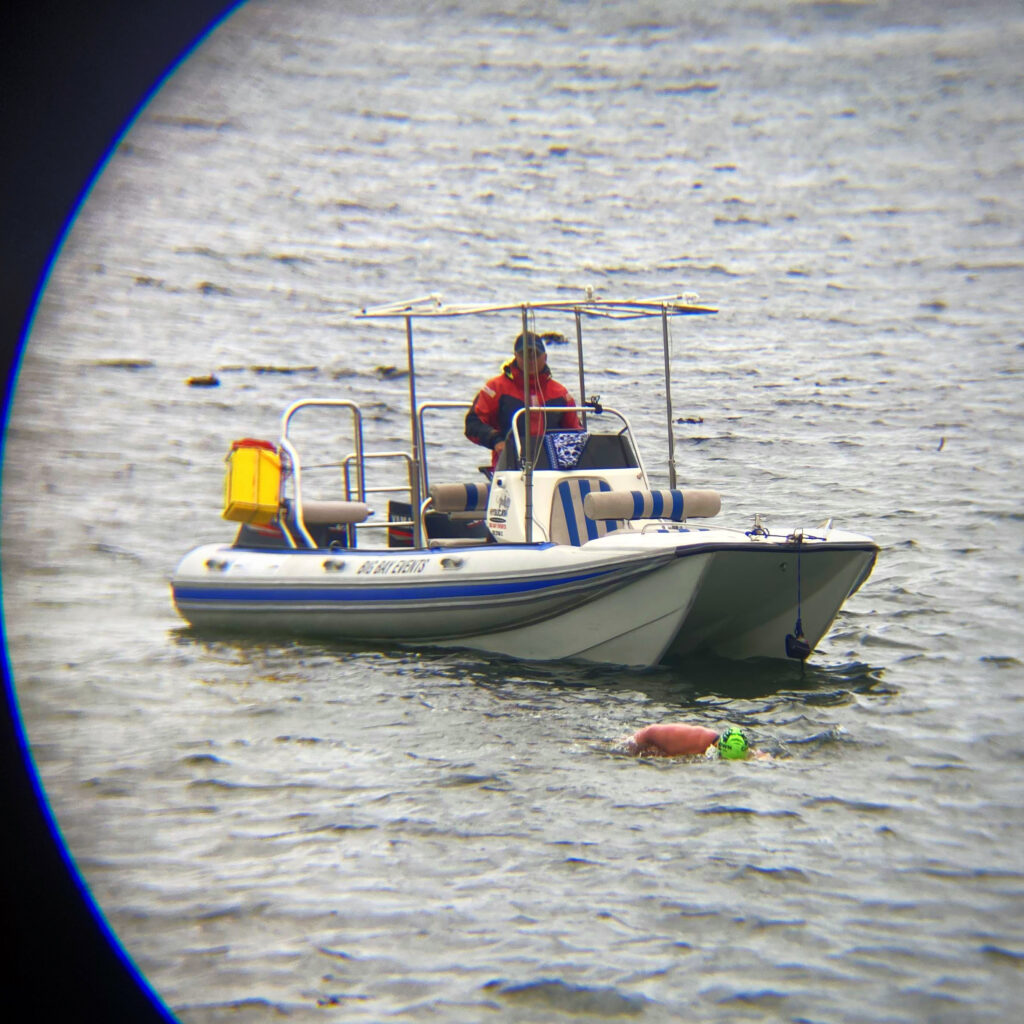
The swimmer does not need to swim in a perfectly straight line. In fact, the CLDSA strongly recommends staying close to the support boat. The skipper will pick the best line based on current, wind and conditions — that is their job on the swim.
Support Swimmers
For solo swims longer than 10km, there is no in-water accompaniment for the first three
hours. After that, one support swimmer may join for up to an hour, and then there needs to be a two-hour gap before any other support swimmer can get in the water again. Any individual support swimmer is limited to a total of three hours per crossing. Support swimmers must swim alongside the swimmer — not in front of the swimmer — and they can’t pace or interfere in any way. Any request for a support swimmer has to be approved by the skipper before they enter the water. That said, the skipper does have discretion. If someone cramps badly, or conditions deteriorate, the skipper may request a support swimmer for safety reasons. The same applies near the end of a swim if things get rough. Safety always comes first.

The Skipper has Authority over a Swim
By starting the swim, the swimmer accepts the skipper’s authority. The skipper and crew are responsible for the safety of everyone involved — swimmers included. At any point, in consultation with the observer and crew, the skipper can call off the swim for safety reasons. No debate, and definitely no arguing mid-ocean.
In Conclusion
A recognised swim is shore to shore, non-stop, self-powered, properly observed, and safely supported.
If you are unsure about anything — start points, routes, feeds, accompaniment, boats — please feel free to ask questions.
Related posts

CLDSA Swim Rules: Everything You Need to Know About Observers
Open Water Swimming is a team sport, from the swimmer to the coach, from the squad and club training teams, as well as the the skipper […]
CLDSA Swim Rules: What Can You Actually Wear?
We follow a set of standard guidelines defined by the English Channel Rules, and in 2021 the CLDSA formally voted to include a wetsuit category. We’ve […]
Membership to the CLDSA
The Cape Long Distance Swimming Association was established to record swimmer’s achievements and help swimmer’s achieve their goals. Because of this, they have created a legacy […]