

Interview with Ryan Stramrood about his circumnavigation of St. Helena Island.
St. Helena island is rugged and remote island in the South Atlantic Ocean. Recently, Ryan Stramrood circumnavigated the island, a gruelling and challenging ultra-swim of 48km. We managed to interview him on his arrival back in South Africa.
Tell us about your swim around St. Helena Island.
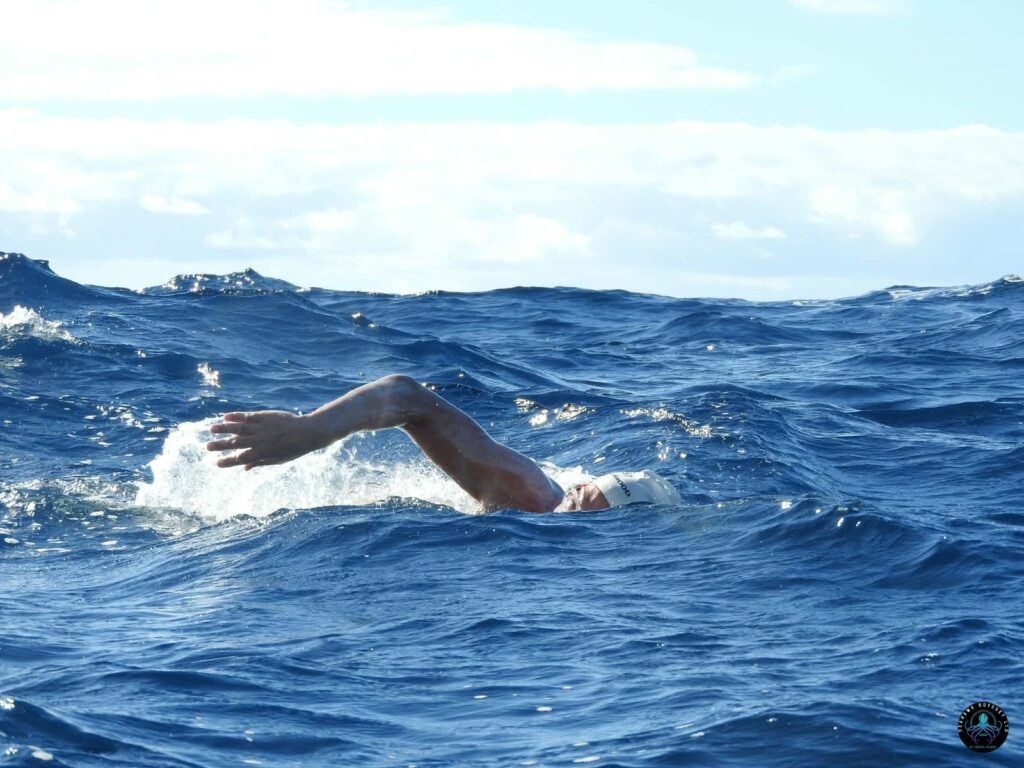
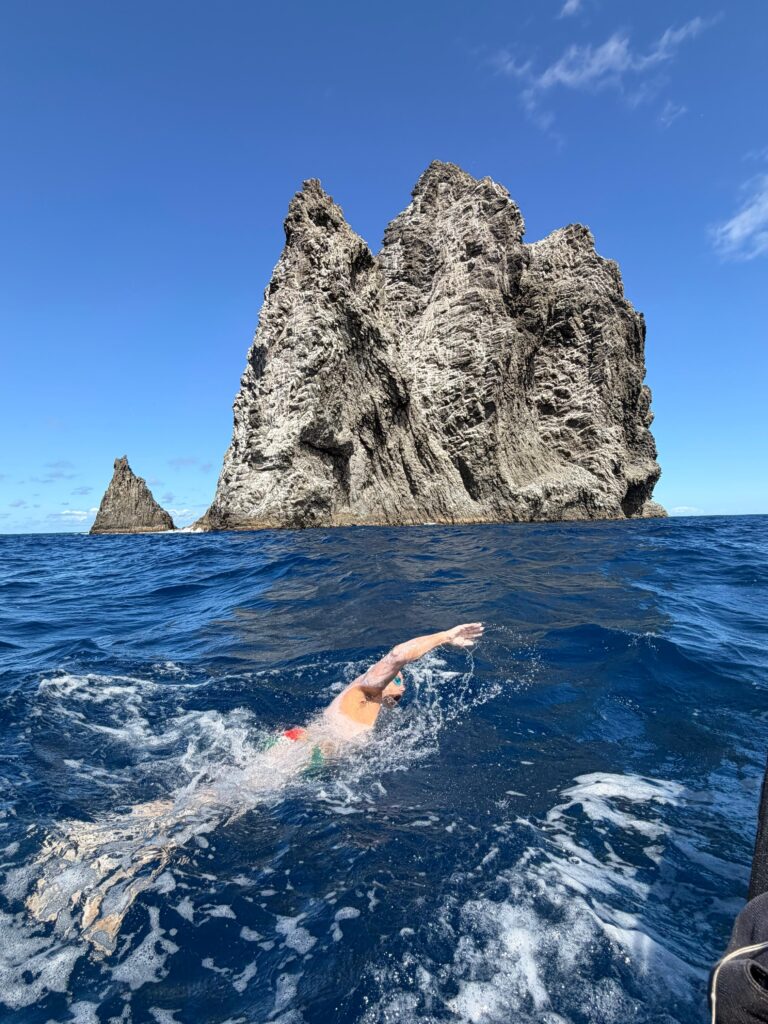
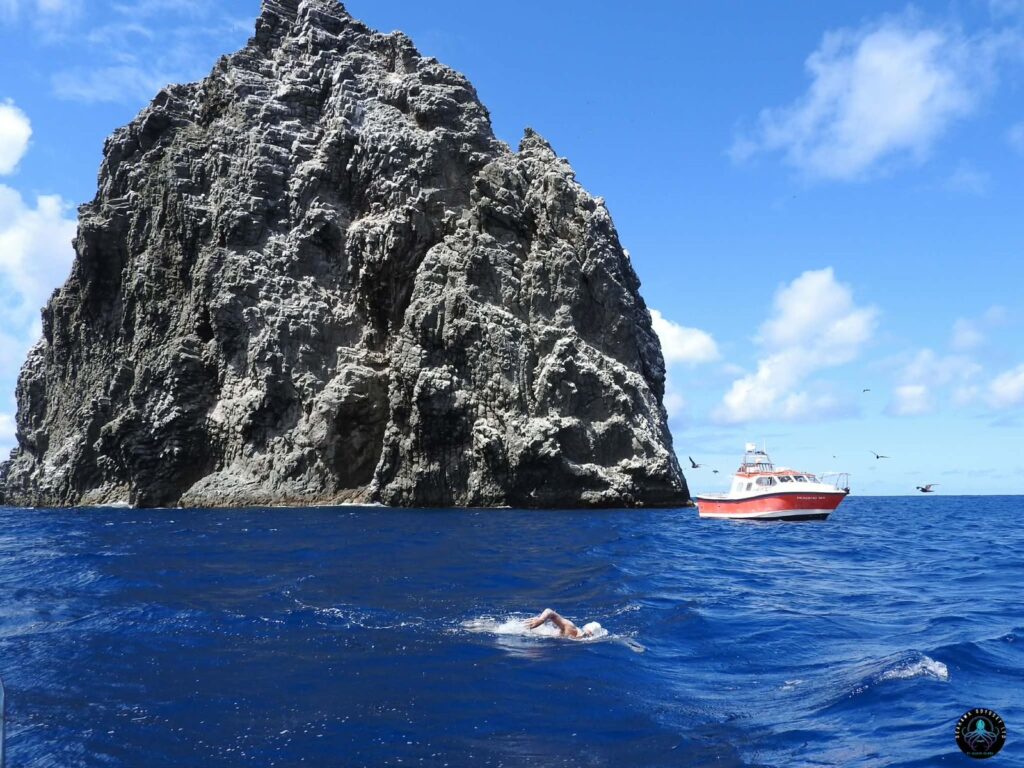
It is certainly not an easy swim. But starting with three huge positives – 1) the water is absolutely beautiful, crystal clear and warm, 2) the visuals you see in daylight of these incredible volcanic ‘Jurassic Park’ cliff faces are just incredible and 3) the island itself is an absolute bucket list place to visit.
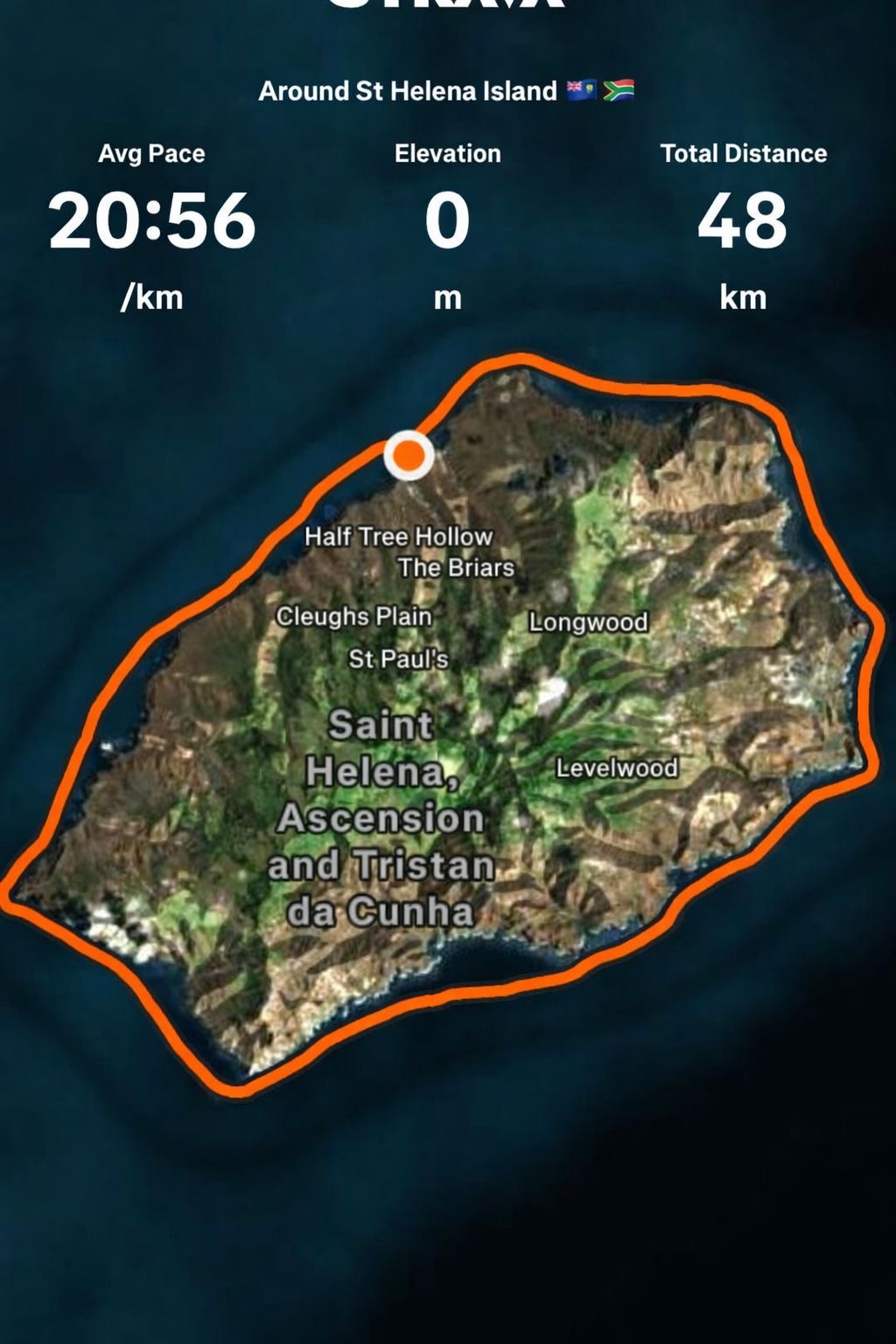
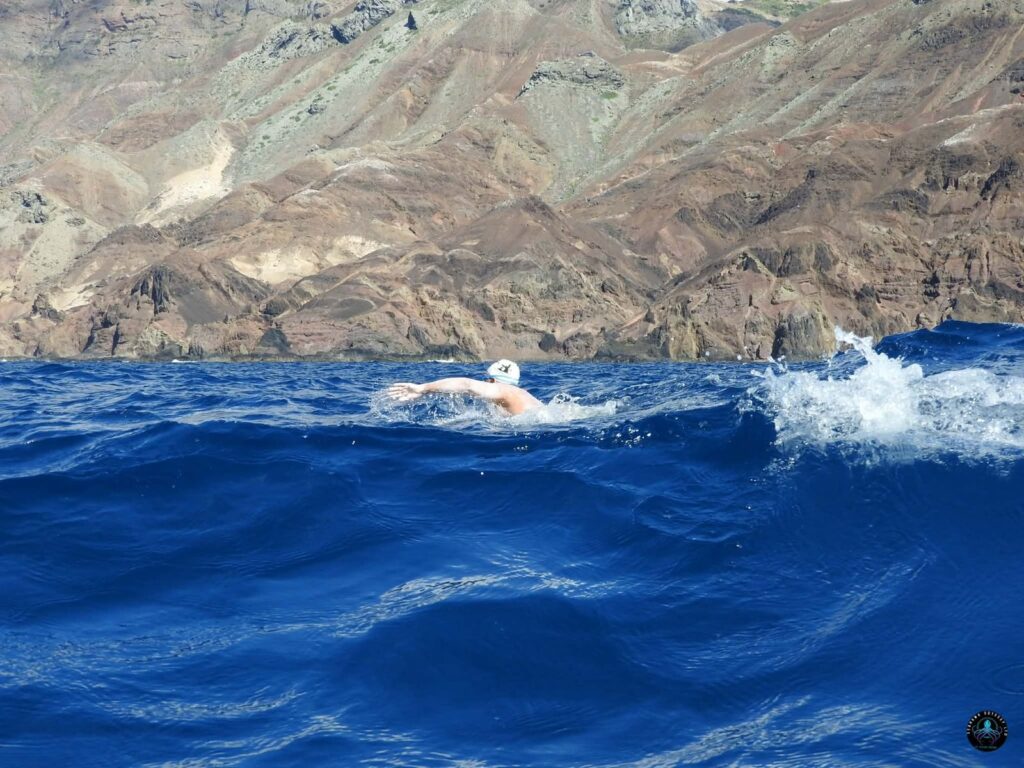
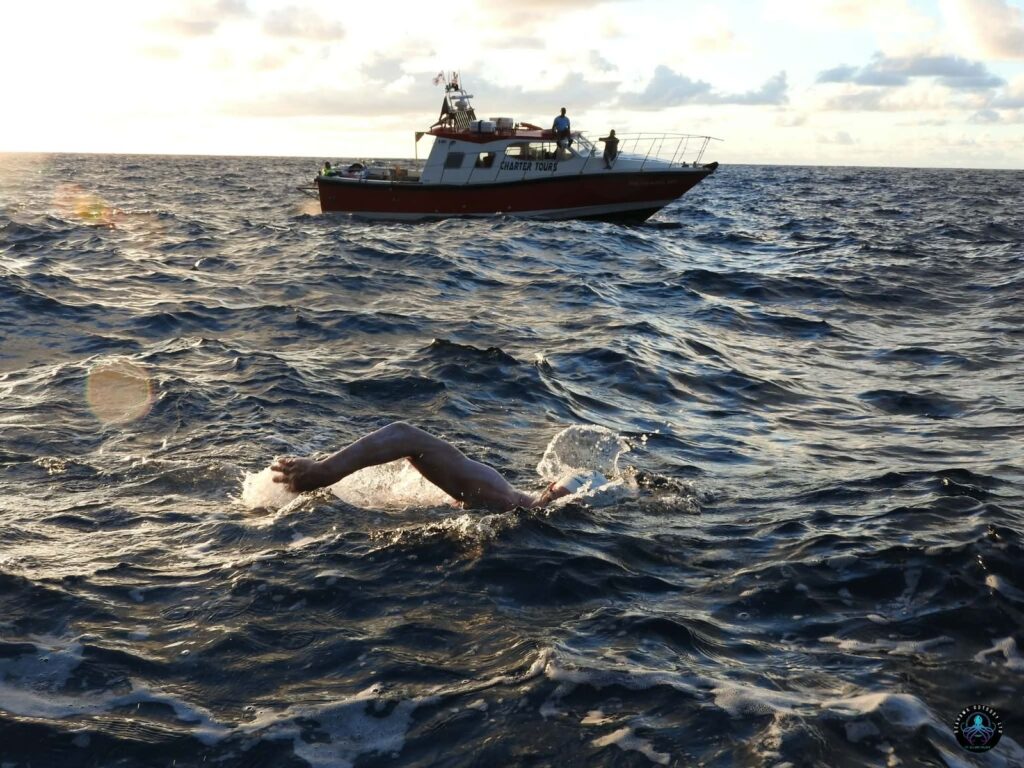
The swim itself, 48km circumference of the island (sold as 47kms) can produce extremely tumultuous water if there is even a small swell running. The swell is not necessarily big, just that the waves collide with the vertical cliffs and refract back to meet the next incoming waves, plus the island’s shelf rises rapidly from the deep and causes the water to do all kinds of bumpy things that are not user-friendly to a swimmer.
The desire is to get into a rhythm as quickly as possible and hopefully a state of mental flow which help focus as well as time and distance to pass quicker. My attempt on Saint Helena Island did not allow for any rhythm or flow from start to finish. I felt as if I was constantly arguing with choppy water which did not know which way it wanted to go. It required constant adjustments, corrections and additional effort to keep moving forward. It is hard work.
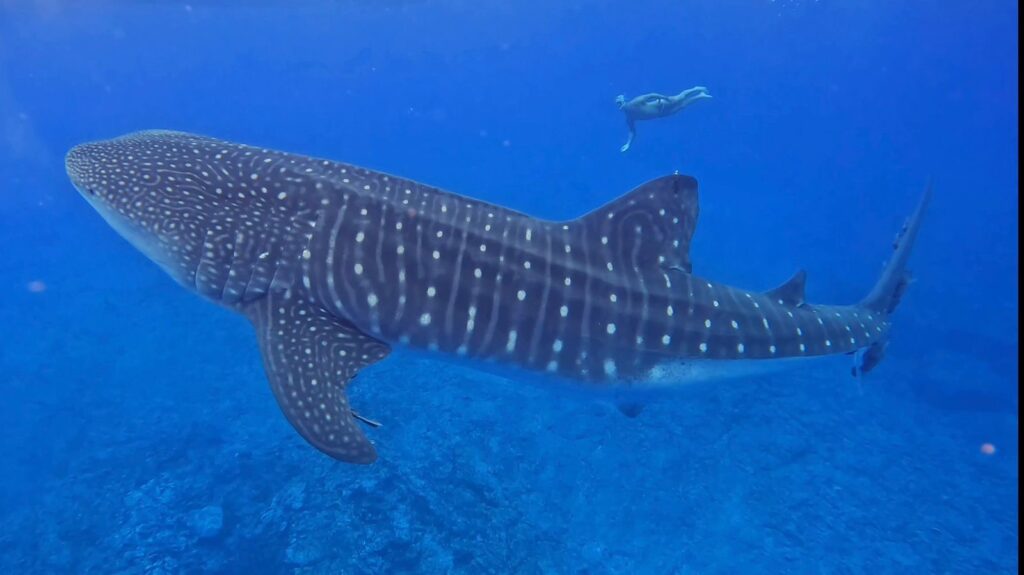
An absolute highlight for me was when daylight eventually arrived after seven hours in the pitch dark, the water allowed me to see stuff for the first time, and all of a sudden, right in front of me, was a massive whale shark swimming directly towards me and only a meter below. After the initial natural shock, I was able to appreciate its majestic beauty as its full body length sailed slowly just below my reach.
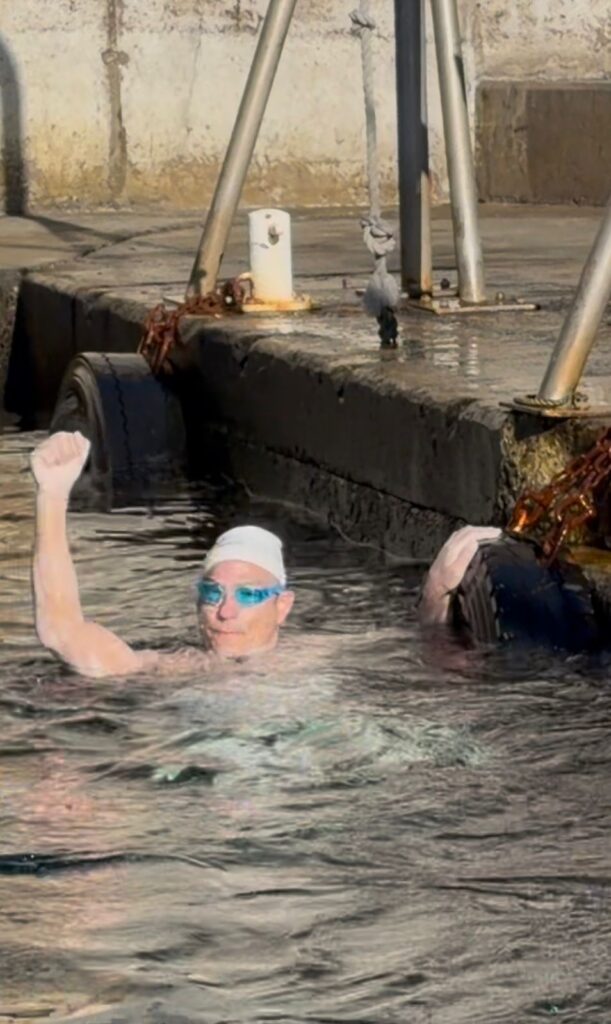
Of course, with any circumnavigation swim like this, a major highlight is making it back to your starting point and putting a hand on the harbour wall tyre which signifies success – all while a harbour pier packed with islanders who had come to see me finish, clapping and cheering. It is a feeling I will not forget in a rush.
Tell us about your swimming journey so far.
My swimming journey spans 23 years and is absolutely packed with swims of all kinds. I was a late bloomer, only started swimming at the age of 29, and succeeded in my first Robben Island crossing in 2003. I’ve then went on to complete the English Channel in 2008 and many other notable swims around that. Slowly I started to push boundaries against the element of cold, realising just how unbelievably impactful the element of cold is on us humans and how incredibly hard it is to perform when the cold starts to creep into one’s core. This fascinated me and I pushed firstly my own boundaries and eventually beyond these wherever I could. I was a founding member of the International Ice Swimming Association (IISA), and a few pioneers of the sport began in earnest to structure it and to grow its uptake globally.

This journey took me all over the world to Siberia, the Arctic Circle, all over Russia, Europe, to the Bering sea, and right the way down to Antarctica where I achieved the first official ice mile in a water temperature measured at -1°C.

It would be way too cumbersome to name all my swims here, and there have been some failures along the way too. I have completed 146 Robben Island crossings, swam the Strait of Gibraltar (Europe to Africa) twice, swam across FalseBay to become the first person to ever achieve the West to East route -this served to open the False Bay swim that for the rest of the world making it the popular challenge it is today. I swam across the Bonaficio Strait (Italy to France), became the first to ever complete the Cape Town Big 5, the first male to complete the Cape Town Triple Crown and have now added the ultra-marathon St Helena Island circumnavigation to the list. I was the third person in the world to attempt it officially and managed to achieve the fastest time in 16 hours 50 minutes and 42 seconds.
What did a typical week of training look like for you in the build up to your swim?
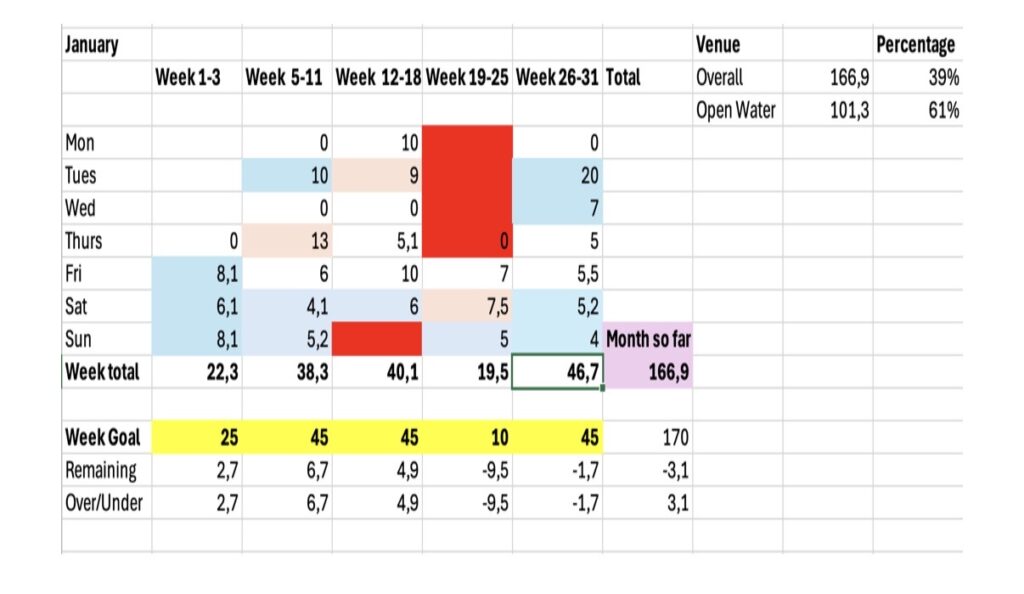
I only had 4 months to train, with business travel in between, and needed to get from an approximate 10-15kms/week up to 45-50kms/week in the short period. So as not to injure myself and to ensure I stayed on the right trajectory, I set targets per week upfront on a spreadsheet, blocking off days I knew I would be unable to train and then did my level best to stick to it. I also tried to maintain at least 40% in open water as I knew this would be a bumpy swim and only open water can prepared the right muscles for it. The rest was in the pool.

How did you train your mind for such a big challenge?
This is the most important question. A swim such as this is very much a mental challenge. Despite being exhausting and requiring massive discipline to get your body fit enough to complete it, fitness is actually the easy part. But if your mind lets you down on the day, no matter what your body does, your chances are slim. I spend a lot of time understanding this, visualising the different elements of the swim and predicting the curveballs that were bound to come my way and impact my mind and mood. I knew the different landmarks all the way around the island really well (research), and I made some upfront conscious decisions on, for example “who do I wanted to be in hour 14 (an hour beyond what I had ever swum before?)”. “What do I want my mindset to be? I know it is going to hurt, I know I am going to be over it, I know I will be exhausted”. But I can’t let that headspace take control as it spirals quickly, so I decide ahead of time what I should think and, for eg, what joke I should try make with the support crew to lift their spirits, and in turn my own, despite what I am really feeling inside. I also set lots of mini targets along the way to keep myself entertained and positive. Worked perfectly.
What was a setback to your training that you had to overcome?
I had a very short time period in which to get my body ready for this challenge. And in that short four-month period, I had business trips to the United States, a trip to Kenya and three trips locally across SA. All of these took me out of the water and set my training back, one adding a week of jet lag too. But my body and health were impeccable and I factored this all in upfront.
What was the biggest challenge during your crossing and how did you overcome it?
The biggest challenge of this circumnavigation is the persistent “washing machine” water which drains one’s energy and can’t decide which way it wants to push or pull you. I was refused any rhythm and that’s brutal. The midnight starting time is also a challenge. The 6-7 hrs of pitch-dark, rough water with much sea life movement in the shadows is a mental challenge in itself. But just the requirement to start a daunting 17-hour challenge 3hrs AFTER one’s usual body clock bedtime, takes some planning and mental calibration too.

How did you choose this swim?
I chose this swim as it had never even been attempted before and the unknown had a huge appeal to me. It also presented a distance I had never come close to achieving before, unknown currents, tidal impacts, winds, water temps, so it would push me past any comfort zone and I’ve always loved the pioneering aspect of a new major swim. The warm water was also a nice change for me and an attraction.
Part of the sessions I deliver around the world to businesses and leadership teams centres around goal setting and speaks loudly to the value (and difficulty) in setting goal beyond a level you believe you can achieve. It’s not a natural human default. This swim helped me ‘walk my talk’ once again.
My plan was to be first attempt, but this was not to be. 3rd human to achieve it was pioneering enough.
St Helena Island is also an amazing place to visit, and I probably would never have got there in my lifetime if I did not have a challenge like this to start the process.
What did you learn from your swim?
Very simply, once again, that I am capable of pushing my own boundaries a step further that I feel possible at the time. From this comes wonderful growth and reminds one what a little bravery, plenty discipline and lots of sacrifice can achieve.
What would you say to other swimmers wanting to do a huge swim?
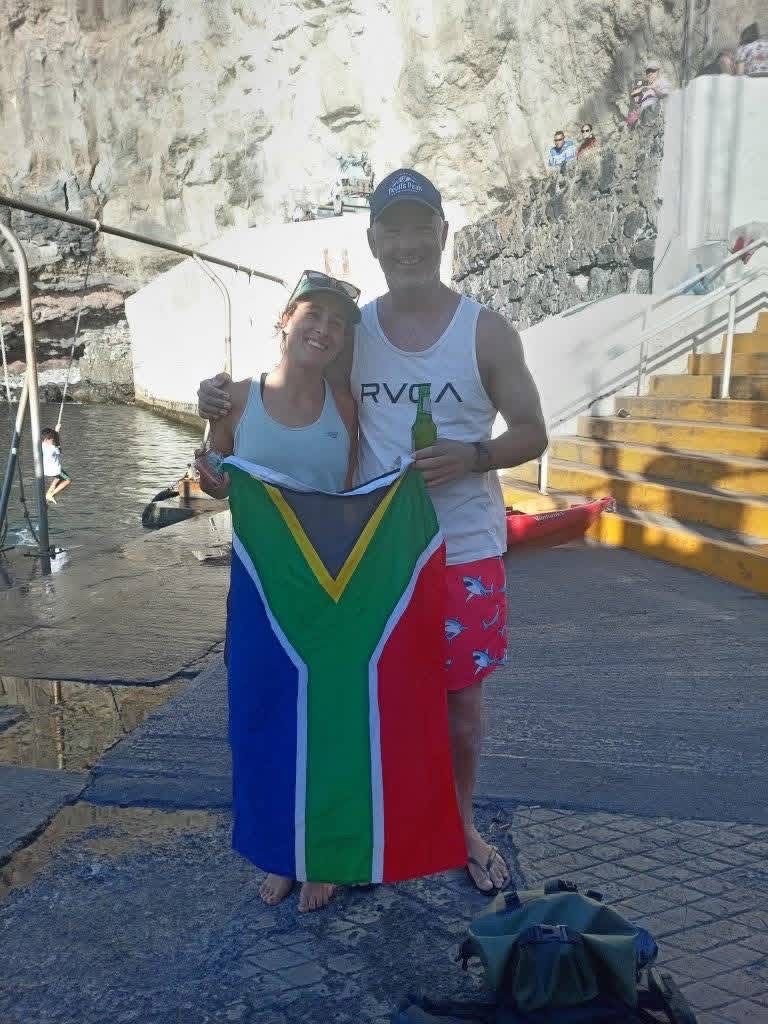
Chat to the right people. Listen to their stories. Hear their advice. And decide if you have the discipline to get yourself ready for whatever your challenge is. It’s a head game.
What is next for you?
I am processing all the learnings from this achievement, packaging them and will be sharing around the world with businesses, teams and leaders on all levels. Great fresh insights added to my performance sessions and while doing so, I be doing plenty fun swims for ENJOYMENT – because that is why I really swim. Until the new challenge pops up and presses all the right buttons for me.
Related posts
Coping with the Cold in Cold Water Swimming
Benefits of cold-water swimming There are numerous benefits to this fun outdoor sport. Swimming in general is a very cardiovascular sport, promoting both cardiac respiratory fitness. […]
Meet the Committee: An Interview with Peter Emslie
I have served as CLDSA’s Ratification Officer since 2023. By day I’m a sales manager in the pesticide industry, based in Paarl. Outside of work I’m […]
Open Water Swimming Tips from Dr. Cleeve Robertson of the N.S.R.I.
We asked Dr. Cleeve Robertson of the National Sea Rescue Institute (NSRI) for some open water safety tips for our swimmers. Dr Robertson was the CEO […]