
Interview with Meinhardt Esterhuizen About his False Bay Crossing.
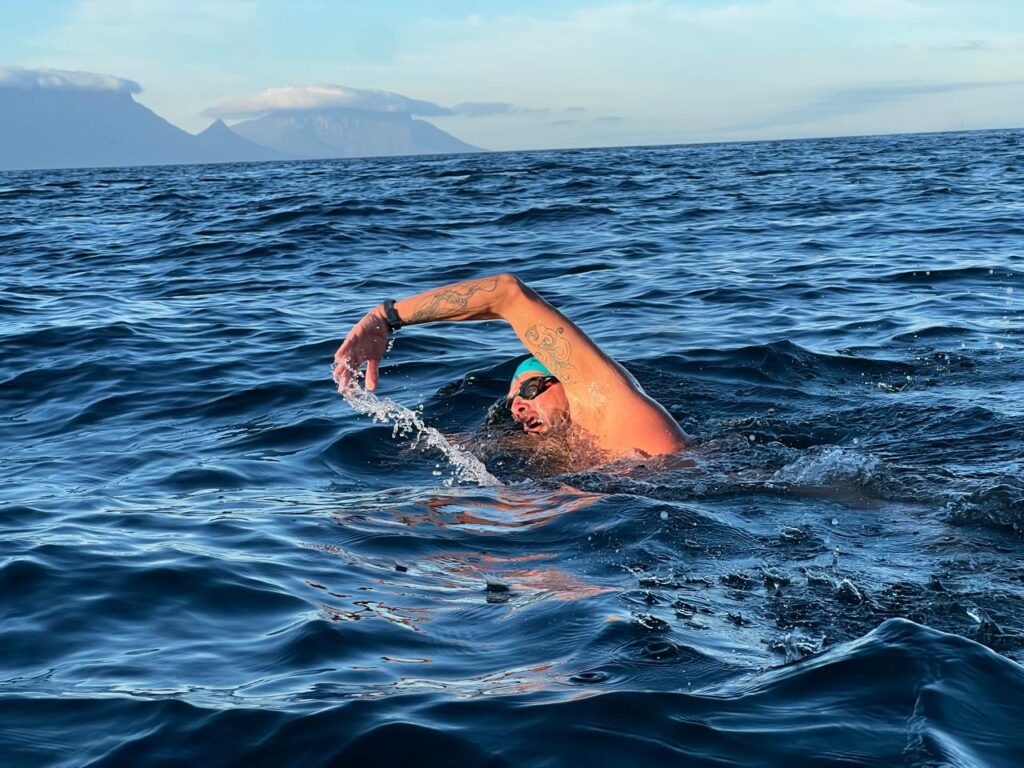
Meinhardt Esterhuizen (age 16) recently completed a False Bay Crossing, in the Skins Category. He is one of the youngest swimmers to complete this route and we are all looking forward to seeing more swims from this young man in the future.
Tell us about your False Bay Crossing:
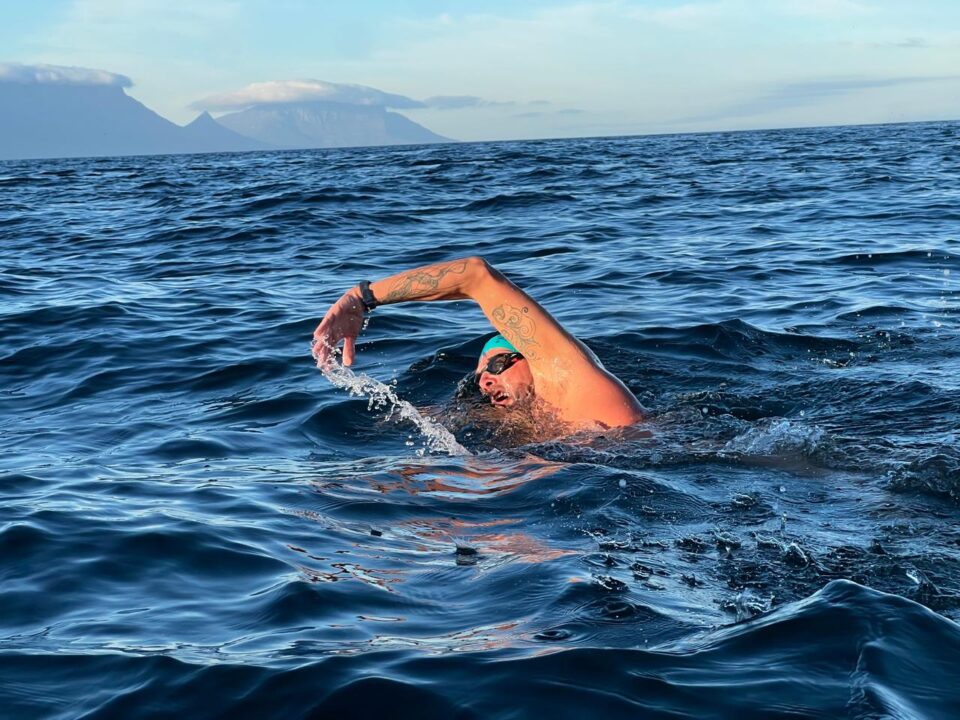
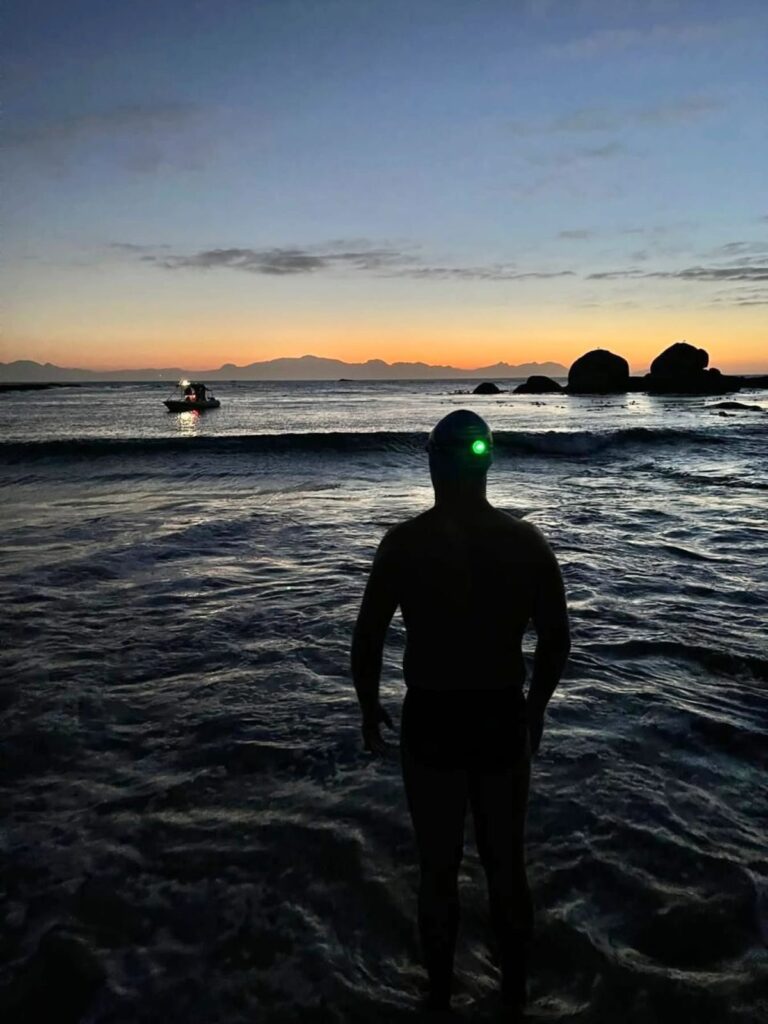
The greatest highlight for me was that morning when I entered the water at Millers point. A crescent moon hung over the mountains, and the sun was just beginning to rise. It was exactly the image I had carried in my mind, and that moment became my favourite part of the entire swim. As a Christian, my faith shapes everything I do. My walk with the Lord is central to my life, and that is why the combination of the moon and the sunrise was so deeply meaningful to me. The sunrise reminded me of the journey I walked through primary school, where the verse in Proverbs became a personal promise: “The path of the righteous is like the morning sun, shining ever brighter till the full light of day.” That scripture carried me through many seasons. Standing there that morning, it felt like a confirmation that even when you are experiencing a high moment or accomplishing something significant, your path will continue to grow brighter and brighter until the day fully breaks. The crescent moon carried an equally personal meaning. When I was younger, I struggled with fear and with strengthening my faith. My mother recognised this and ministered to me while the song “Sekelmaan” by Retief Burger played in the background. From that moment on, the crescent moon became a symbol of hope for me — a reminder that fear does not have the final word. So standing there that morning, with both the rising sun and the crescent moon visible at the same time, felt like a personal love letter from the Lord. It was a powerful reminder of the journey I have walked in faith and the promises that continue to guide my life. So even through I felt on my nerves for what lie ahead, that was really special.

Tell us About Your Swimming Journey so far:
Swimming began as therapy when I was three years old. After being hospitalised and spending time in ICU due to lung complications, I needed a way to strengthen my lungs. On medical advice, swimming was recommended as the most effective solution. What started as a recovery process soon became something much more significant in my life. In primary school, I focused on sprint events, but as I progressed into high school, I transitioned into open water swimming. What began as treatment gradually developed into passion and purpose.
What did a typical week of training look like for you in the build up to your crossing?
Many mornings began before sunrise, swimming up to four kilometres while most of my peers were still asleep. After completing my session, I would cycle to school — regardless of the weather, whether it was dark, cold, or raining. People often questioned why I was always cycling everywhere and training so intensely, but I was committed to the process. With the help of others, like Praise who assisted me when I had problems with my bike, I continued pushing forward. After a full academic school day, I would attend rugby practice and then return to the pool for another two-hour session to build my mileage. My days often stretched until 20:00 or even 21:30. Only after that would I return home to complete homework and prepare for upcoming tests. Then I would rest briefly before repeating the entire routine the next day. It was demanding, but it built both character and resilience.

How did you train your mind for such a big challenge?
I intentionally trained my mind by consistently doing small, difficult tasks. I believe that if you discipline yourself to conquer small challenges daily, you prepare yourself for larger challenges in the future. I often refer to “lions and bears,” inspired by the biblical account of David. When David stood before Goliath, he declared that the Lord who delivered him from the lion and the bear would also deliver him from the giant. That perspective shaped my mindset. By remembering previous victories — my own lions and bears — I prepared myself mentally for the giants that lay ahead.
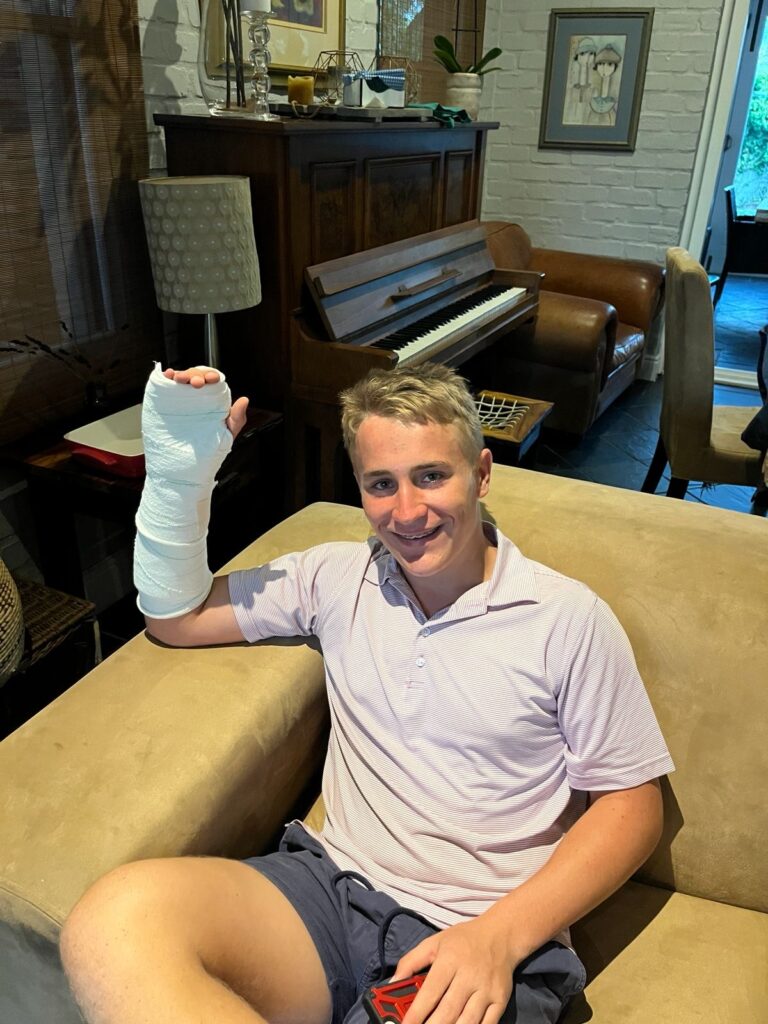
What was a setback to your training that you had to overcome?
During preparation for the swim, I broke my wrist. Instead of allowing the injury to halt my progress entirely, I adapted. Since I was unable to properly use my arm, I focused primarily on kicking drills and other training methods within my physical limitations. Rather than stopping, I adjusted to my circumstances and continued moving forward.

What was the biggest challenge during your crossing and how did you overcome it?
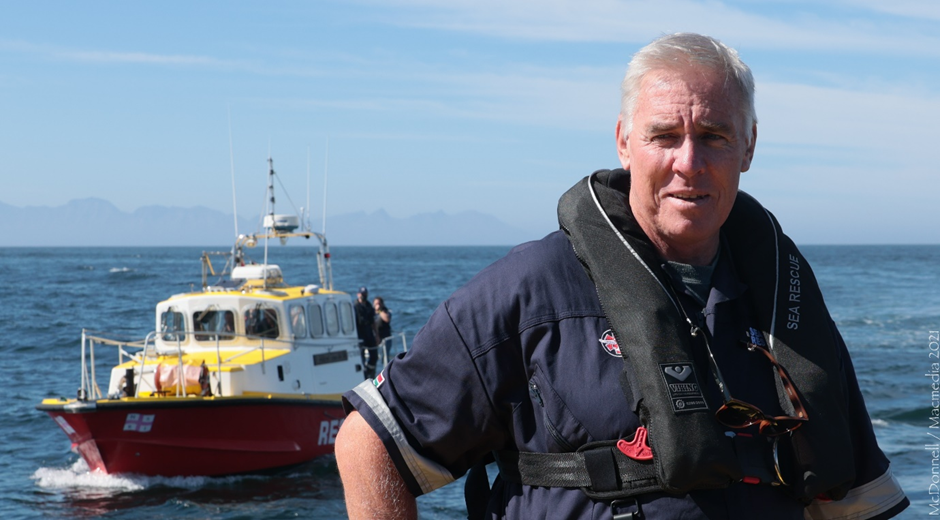
As a young athlete, the most challenging aspect of the swim was the mental battle. The start and the finish were the most taxing. As I started that morning the nerves along with carbo loading and the up and down waves had me sick within the first 3km. I then also struggled with my feeds because I gagged if I tried to drink it. This is where oom Derrick’s experience really came to the fore, he started to ask me what I feel like and he mixed and matched the things my mom packed for me to get me through. So glad for a resourceful mother and a seasoned open water skipper. The middle part went like a dream and I swam like a machine. Then the wind became stronger, the water bounced off the boat into my face all the time. I constantly asked oom Derrick, how far to go still? He wisely replied, 30 minutes till your next feed… I trusted him and swam till the next feed, because from my perspective Rooiels’ mountains did not come any closer. The shackles came off when he said to me at my last feed. “Meinhardt you have 800m to go and 20 minutes to do it to swim a sub 10. So part of overcoming the mental challenge is to have a great crew with you.
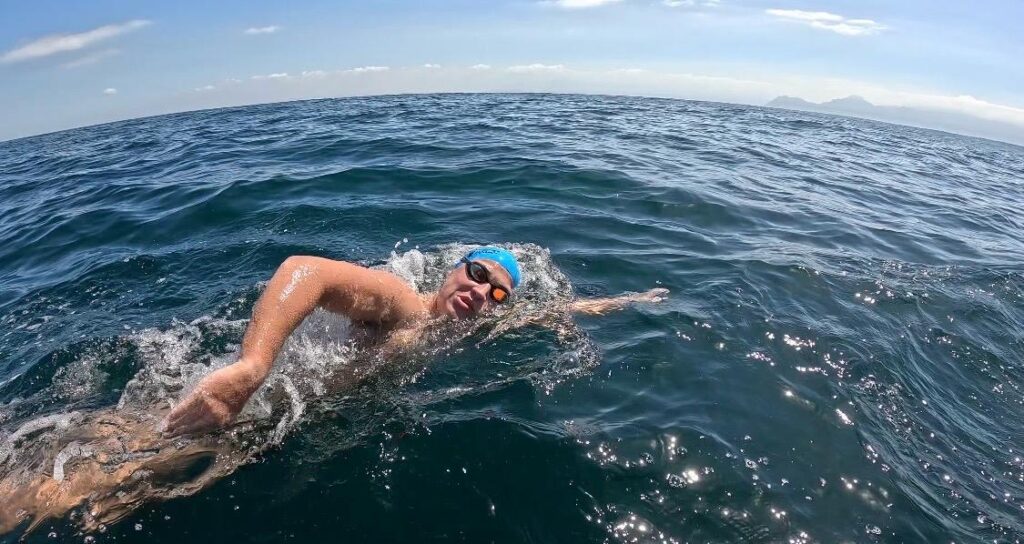
Why did you choose to swim a False Bay Crossing?
I chose to swim False Bay because I wanted to challenge the mindset that young people should always take the easiest path available. In the open water swimming community, False Bay is regarded as the “Everest” of South African swims. I wanted to pursue something that demanded courage and perseverance. More importantly, I hoped to inspire others — especially teenagers — to embrace difficult challenges rather than avoid them.

What did you learn from your False Bay Crossing?
I wrote it down as “Remember False Bay”: We need to sit down sometimes and reflect on what we have learnt on the journey.
- Sometimes it takes a little throwing up. (After you do it you feel a lot better).
- Live on patience, not frustration. (When things aren’t going your way, frustration only drains your energy).
- Emotions get you going, but truth stays your greatest motivator. (The truth of your mission sustains you much longer than the emotional charge of beginning something).
- When the going gets tough, welcome to life. (Its going to be tough, get over yourself).
- Keep your hand out of the propeller, it’s not worth it. (Sometimes when you want to give up without looking like a failure, you think about creative ways to do that. Not worth it!).
- Do what you say, but say a bunch of things. (Be a person that follows through, but also be someone that actually says things you will do in smaller targets to achieve it).
- If you want to be average, do average things. (Average is boring).
- Be willing to lose sight of land just keep moving forward. (Sometimes you will be in uncharted territory, that is where you continue because that is what you set out to do).
- Trust your skipper. (He has a better vantage point).
- People don’t remember how you got out, they remember that you did. (Even if you stumble out of the water like a drunk man, people only remembered that you did it).

What would you say to other swimmers wanting to do a False Bay Crossing?
I would tell others that joy is found in the journey. Joy is not merely the moment you arrive at Rooi Els or complete the swim. It is found in every early morning, every kilometre trained, and every sacrifice made along the way. Do not only celebrate the achievement — learn to value the preparation.
What is next for you?
Immediately after the swim, my next step was simply to rest. My coach Michelle also has a lot of experience in this and she said to me that we don’t set immediate goals after that achievement. You first want to fall in love with the sport again. Eighteen months of training and 33km at sea for 10 hours, comes down after it has been achieved like a ton of bricks. So jumping straight into a next assignment is too much to digest, and you risk losing your passion when it becomes like that. So 7 weeks of doing normal teenage stuff (mostly nothing – hahaha), my perspective reset and when a friend asked me to swim the west coast angle with her I felt excitement again. This “champion of False Bay” was duly humbled by the cold Atlantic when I had to be pulled after 12km due to early onset hypothermia. I knew I was ready again, because in stead of defeat I felt motivated to go and finish it soon…
I am now aiming to complete the Big Five and the Cape Triple Crown in skins, while also remaining committed to my academic development. I do not necessarily intend to swim professionally for the rest of my life, but I do intend to continue pursuing excellence — both in sport and in my education.