
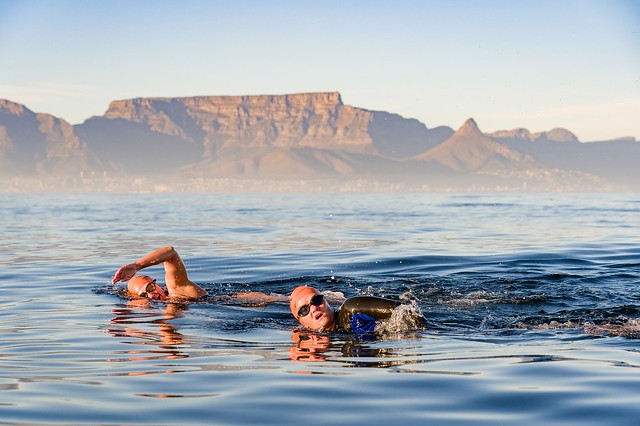
The iconic Robben Island Crossing from the World Heritage Site, Robben Island to Blouberg Beach, is a very popular swim route. This is the route that is on several long distance swimmer’s bucket list, and once they have achieved it, it tends be the first of many other open water swims around Cape Town.

The Island
Robben Island is an island in Table Bay, 7.4 km from the nearest beach at Blouberg Beach. The island is of historical and political importance to all South Africans, and became a World Heritage Site in 1999. The name Robben Island comes from the Dutch word for seal, “Robbe.” The island was used as a leper colony from 1836-1931. During the twentieth century it was used as a political prison, and possibly the most famous prisoner of all, was South African icon, Nelson Mandela. Today the island is a symbol of freedom and the crossing from Robben Island to Blouberg Beach is not just a physical achievement, but an emotional one, as well.

The History
The first Robben Island swim was recorded in 1909 when Henry Charteris Hooper swam from Robben Island to the old Cape Town harbour. It took Hooper just under 7 hours to complete the swim of approximately 11km. Thereafter the more popular route became Robben Island to Three Anchor Bay, 145 people completed that 10.2km swim. The last person to swim that route was in 2022, and since then, to avoid the difficulties of swimming in a shipping lane, a shorter 7.4km route, from Robben Island to Big Bay, has become the preferred route. This route was first swum by Peter Bales in 1972, and a total of 3092 swims have been ratified so far. In 2021 wet suit swims started to be recognised and of the 3092 registered swims, 2298 of them have been completed by “skins” swimmers.
The Route
The shorter distance, 7.4km, belies the difficulties associated with this swim. The Robben Island Crossing is a swim with many challenges, including cold Atlantic waters and there are strong ocean currents for the swimmers and their crew to navigate. The water temperature averages between twelve and fifteen degrees Celsius, and cold water acclimitization is an essential part of the training build up. The most popular time of year to swim this route is March, through May, during the Cape Town autumn months, when the cold summer south easterly winds calm down and before the furious Cape Town winter arrives in full-force. The weather systems around Cape Town are particularly unpredictable, and it requires a certain level of expertise to choose a correct weather window, not to mention navigating through the often misty waters, and negotiating the local currents and rocky outcrops near the finish.
If you are interested in swimming this route then please feel free to take a look at the CLDSA FAQ.